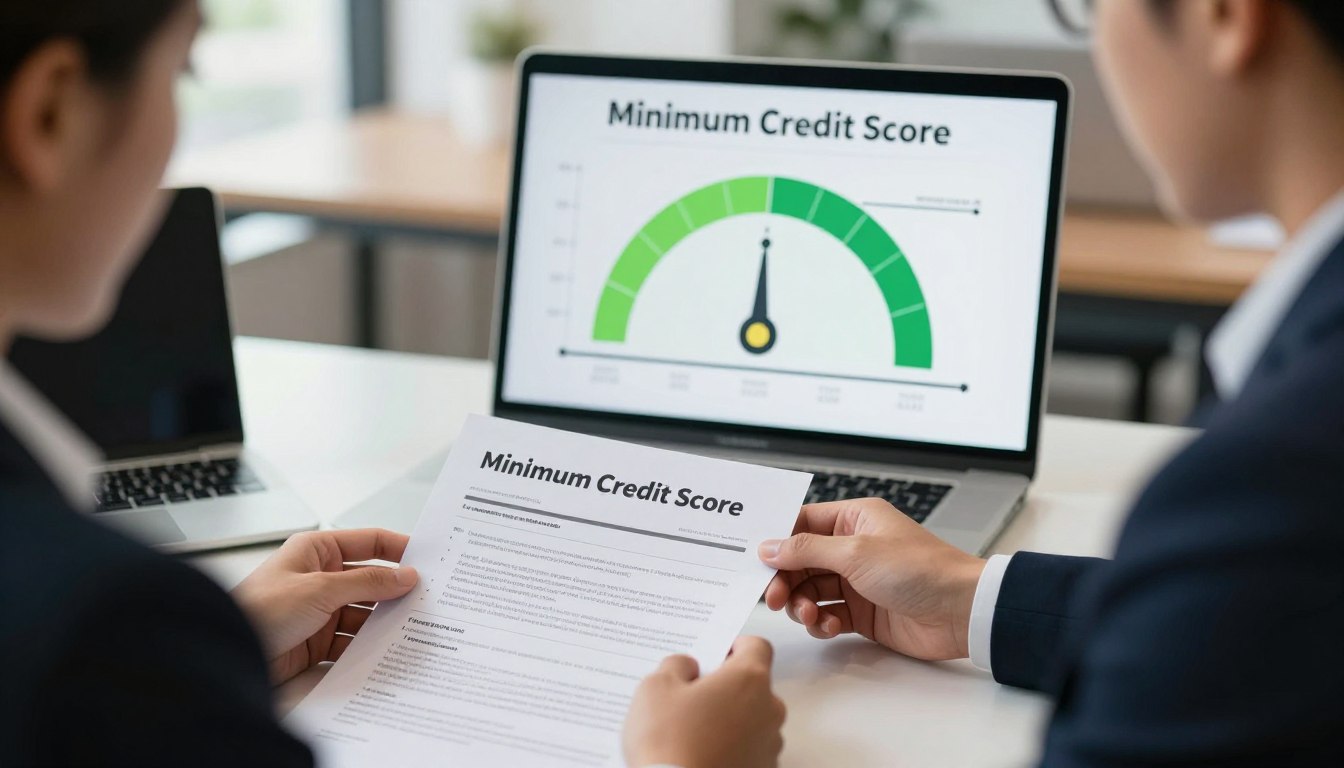
Can a less-than-perfect credit history stop you from securing the funding your small business needs? The answer lies in understanding the role of credit scores in the loan application process.
For entrepreneurs in the United States, knowing the minimum credit score required for a small business loan is crucial. It can significantly impact your ability to secure financing and the terms of the loan.
A good credit score can open doors to better loan options, while a poor one can limit your choices. In this article, we’ll explore the importance of credit scores in securing a business loan and guide you through the process.
Key Takeaways
Table of Contents
- Understanding the minimum credit score required for a small business loan.
- The impact of credit scores on loan approval and terms.
- Tips for improving your credit score to secure better loan options.
- Alternative loan options for businesses with poor credit.
- Steps to take to prepare your credit score for a loan application.
Understanding Business Credit Scores
Understanding your business credit score is crucial for securing loans and maintaining a healthy financial profile. Business credit scores are a critical factor in determining your eligibility for business loans and the terms you’ll be offered.
Business credit scores are distinct from personal credit scores, and it’s essential to comprehend the differences between them. While personal credit scores reflect your individual credit history, business credit scores are based on your company’s financial history and credit activities.
Personal vs. Business Credit Scores
Personal credit scores are used to evaluate an individual’s creditworthiness, typically for personal loans, credit cards, and other personal financial obligations. In contrast, business credit scores are designed to assess a company’s creditworthiness, providing lenders with insights into the business’s financial stability and ability to repay loans.
It’s not uncommon for lenders to consider both personal and business credit scores when evaluating loan applications, especially for small businesses or startups where the business and personal finances may be closely intertwined.
How Credit Bureaus Calculate Business Credit Scores
Business credit scores are calculated by credit bureaus such as Dun & Bradstreet, Experian, and Equifax, using data from public records, trade references, and other sources. The calculation typically involves factors such as payment history, credit utilization, business age, and industry risk.
Payment history is a significant component, as it reflects your business’s track record of making timely payments to creditors. Credit utilization, or the percentage of available credit being used, is another crucial factor, as high utilization can indicate financial strain.
The business credit score is a critical determinant of your business loan credit score requirements. Lenders use this score to assess the risk of lending to your business, and it directly impacts your credit score impact on business loan eligibility. By maintaining a healthy business credit score, you can improve your chances of securing the financing you need to grow your business.
The Credit Score Needed for Business Loan Approval
The credit score required for business loan approval varies significantly across different lenders and loan types. Understanding these requirements is essential for businesses to identify the most suitable loan options for their credit profile.
Different lenders have varying credit score requirements, and the type of loan also plays a crucial role in determining the needed credit score. Here’s a breakdown of the typical credit scores required for different types of business loans:
Traditional Bank Loans
Traditional bank loans typically require a higher credit score, often in the range of 650-700+. Banks view borrowers with higher credit scores as less risky, making it more likely for them to approve loan applications.
- A credit score of 650 or higher is generally considered good for traditional bank loans.
- Banks may have additional requirements, such as collateral or a personal guarantee.
- The loan terms, including interest rates and repayment periods, may vary based on the credit score.
SBA Loans
SBA loans, backed by the Small Business Administration, have different credit score requirements. While the SBA doesn’t specify a minimum credit score, most lenders require a score of 140-160+ for SBA 7(a) loans.
SBA loans are more flexible, but lenders still consider credit scores when evaluating loan applications.
Online Lenders and Alternative Financing
Online lenders and alternative financing options often have more lenient credit score requirements, typically ranging from 500-600+. These lenders may consider other factors, such as business revenue and cash flow, when evaluating loan applications.
- Online lenders may offer faster approval and disbursement processes.
- Alternative financing options, such as invoice financing or merchant cash advances, may have different credit score requirements.
- Borrowers with lower credit scores may face higher interest rates or stricter repayment terms.
By understanding the credit score requirements for different types of business loans, entrepreneurs can make informed decisions about their financing options.

How Lenders Evaluate Your Credit for Business Loans
When applying for a business loan, lenders don’t just look at your credit score; they consider a range of factors to assess your creditworthiness. Understanding these criteria can help you prepare a stronger loan application and increase your chances of approval.
Beyond the Score: Other Factors Lenders Consider
Lenders evaluate several key factors beyond your credit score when assessing your business loan application. These include your business history, revenue requirements, cash flow, and industry risk. By understanding these factors, you can better prepare your financial profile to meet lender requirements.
Key factors lenders consider:
- Business history and age
- Revenue and cash flow
- Industry risk and market conditions
- Collateral and personal guarantees
- Business plan and growth projections
Lenders want to ensure that your business is stable and capable of repaying the loan. By presenting a robust financial profile, you can enhance your credibility and improve your chances of securing a business loan.
Business History and Revenue Requirements
Your business history and revenue are critical factors in determining your eligibility for a business loan. Lenders typically prefer businesses with a proven track record of revenue and a stable financial history.
The following table illustrates typical lender requirements for business history and revenue:
| Lender Type | Business History Requirement | Revenue Requirement |
|---|---|---|
| Traditional Banks | 2+ years | $100,000+ annual revenue |
| Online Lenders | 6 months – 2 years | $50,000+ annual revenue |
| SBA Lenders | 2+ years | $100,000+ annual revenue |
By understanding these requirements, you can better position your business to meet the necessary criteria and improve your chances of securing a business loan.
Steps to Improve Your Credit Score Before Applying
Improving your credit score is a strategic move that can significantly enhance your business loan eligibility. A good credit score not only increases your chances of loan approval but can also help you secure more favorable loan terms.
Checking and Monitoring Your Credit Reports
The first step in improving your credit score is to check your credit reports for any errors or negative marks. You can request a free credit report from the major credit bureaus. Reviewing your reports regularly helps you stay on top of your credit health and catch any discrepancies early.
Key factors to check in your credit reports:
- Personal and business credit history
- Payment history
- Credit utilization ratio
- Public records and collections
Paying Down Existing Debt
High levels of debt can negatively impact your credit score. Paying down existing debt is a direct way to improve your credit utilization ratio, which is a significant factor in determining your credit score.
Strategies for paying down debt:
- Debt snowball method: Pay off smaller debts first
- Debt avalanche method: Pay off debts with the highest interest rates first
- Consolidation: Combine debts into a single, lower-interest loan
| Debt Type | Interest Rate | Balance | Minimum Payment |
|---|---|---|---|
| Credit Card | 18% | $5,000 | $200 |
| Business Loan | 8% | $20,000 | $500 |
| Line of Credit | 12% | $10,000 | $300 |
Establishing Business Credit History
For new businesses or those without an established credit history, building a strong business credit profile is crucial. This involves opening business credit accounts, making timely payments, and maintaining a healthy credit utilization ratio.
Tips for establishing business credit:
- Open a business bank account and credit card
- Apply for a business line of credit
- Make regular, on-time payments

By following these steps and maintaining a healthy credit profile, you can significantly improve your credit score, making you a more attractive candidate for business loan approval.
Business Loan Options for Different Credit Profiles
Different credit profiles qualify for various business loan options, and it’s essential to understand these differences. Your credit score can significantly impact the types of loans available to your business, influencing both the loan amount and the interest rate. By understanding the loan options tailored to your credit profile, you can make informed decisions about your business financing.
Best Options for Excellent Credit (720+)
Businesses with excellent credit scores (720 and above) have access to a wide range of loan options at competitive interest rates. These borrowers are considered low-risk, making them eligible for:
- Traditional bank loans with favorable terms
- SBA loans, which offer government-backed guarantees
- Lines of credit for flexible financing
- Low-interest business credit cards
As Quora’s financial expert once said, “A good credit score is like having a golden key to unlock better loan options.” It’s a critical factor in determining your business’s financial health and opportunities.
| Loan Type | Interest Rate | Loan Amount |
|---|---|---|
| Traditional Bank Loan | 6-8% | $50,000 – $500,000 |
| SBA Loan | 7-10% | $100,000 – $1,000,000 |
| Line of Credit | 8-12% | $10,000 – $100,000 |
Options for Good Credit (660-719)
Businesses with good credit scores (660-719) still have access to a variety of loan options, although the terms might not be as favorable as those for excellent credit. These borrowers can consider:
- Online lenders offering quick approvals
- Alternative financing options, such as invoice financing
- Business credit cards with competitive rates
- Peer-to-peer lending platforms
According to
“For businesses with good credit, the key is to compare rates and terms across different lenders to find the best fit.”
This comparison can help businesses save on interest and fees.
Solutions for Fair or Poor Credit (Below 660)
For businesses with fair or poor credit, loan options may be more limited, but not nonexistent. These borrowers can explore:
- Alternative lenders who consider factors beyond credit score
- Secured loans requiring collateral
- Merchant cash advances, which are based on future sales
- Credit repair loans designed to improve credit scores
Improving your credit score can open up more financing opportunities. By understanding the available loan options and working to enhance your credit profile, you can position your business for long-term success.
Preparing a Strong Loan Application to Offset Credit Concerns
To increase the likelihood of business loan approval, it’s essential to prepare a robust loan application that addresses potential credit concerns. A well-structured loan application can significantly enhance your chances of securing the funds your business needs.
Creating a Compelling Business Plan
A compelling business plan is a critical component of a strong loan application. It should clearly outline your business model, revenue projections, and growth strategies. Lenders want to see that you have a thorough understanding of your business and a clear plan for repaying the loan.
When creating your business plan, be sure to include:
- Detailed market analysis
- Realistic financial projections
- A comprehensive marketing strategy
A well-crafted business plan not only demonstrates your creditworthiness but also showcases your business’s potential for growth and profitability.

Providing Collateral and Personal Guarantees
In addition to a solid business plan, providing collateral or personal guarantees can help mitigate credit concerns. Collateral can be in the form of assets such as property, equipment, or inventory, which can be seized by the lender if you default on the loan.
Personal guarantees, on the other hand, involve pledging your personal assets to secure the loan. While this can be a significant commitment, it demonstrates to lenders that you are confident in your business’s ability to repay the loan.
When considering collateral or personal guarantees, it’s crucial to:
- Understand the risks involved
- Carefully review the loan terms
- Ensure you have a clear plan for repaying the loan
By taking these steps, you can strengthen your loan application and improve your chances of approval, even with credit concerns.
Common Credit Mistakes to Avoid When Seeking Business Financing
When seeking business financing, it’s crucial to avoid common credit mistakes that can hinder your loan approval. A well-managed credit profile is essential for securing a business loan with a favorable credit score threshold for business loan. By being aware of potential pitfalls, you can take steps to protect your credit score and improve your chances of qualifying for the loan you need.
Two significant credit mistakes can impact your ability to secure business financing. Understanding these errors can help you navigate the loan application process more effectively.
Multiple Loan Applications and Hard Inquiries
Submitting multiple loan applications within a short period can negatively affect your credit score. Each application typically triggers a hard inquiry, which can temporarily lower your score. To avoid this, it’s essential to limit your loan applications and shop around for lenders within a specific timeframe, usually 14-45 days, depending on the credit scoring model. This strategy can help minimize the impact of multiple inquiries on your credit score.
To illustrate, let’s consider an example. Suppose you’re applying for an SBA loan, which often requires a qualifying credit score for business loan of 140-160 or higher. If you apply to multiple lenders within a short span, the multiple hard inquiries might reduce your credit score, potentially making it harder to meet the loan requirements.
Mixing Personal and Business Expenses
Another common mistake is commingling personal and business expenses. This practice not only complicates your financial record-keeping but can also affect your credit profiles. Lenders often view mixed finances as a risk factor, as it can be challenging to distinguish between personal and business creditworthiness. Maintaining separate accounts for your business and personal expenses is crucial for a clear financial picture and a stronger loan application.
By avoiding these common credit mistakes, you can enhance your credit profile and increase your chances of securing the business financing you need. Remember, a well-managed credit score is a critical component of a successful loan application, particularly when it comes to meeting the required credit score threshold for business loan approval.
Conclusion
Understanding the credit score needed for a business loan is crucial for entrepreneurs seeking financing. A good credit score can significantly enhance your chances of securing a loan with favorable terms.
As discussed, lenders consider various factors, including credit score, business history, and revenue. By improving your credit profile and preparing a strong loan application, you can offset credit concerns and increase your chances of approval.
A good credit score for a business loan can vary depending on the lender and loan type. Traditional banks often require a higher credit score, while online lenders may be more flexible. Knowing your options and taking steps to improve your credit score can help you navigate the business loan application process successfully.
By applying the knowledge gained from this article, entrepreneurs can make informed decisions and take the necessary steps to secure the financing they need to grow their business.